Dear reader,
How many times have you listened to a whole lesson and come out of it with exactly the same opinion you had going in?
The question sounds small. Plutarch wrote a whole treatise because of it.
This is the first of a correspondence I intend to keep every month: what I am reading, what has shifted in my head, and what that asks of me in practice. You receive it before it is published on the site.
Plutarch dealt with what the ancients placed at the beginning of formation, not at the end: listening. Not attention, which everyone knows to be necessary, but something far rarer, suspending your own answer while the other is still speaking.
The young man he describes arrives at the lecture hall with his comment already made and listens only enough to fit it in. He leaves with the feeling of having taken part.
The image that survived from him is exact: the mind is not a vessel to be filled, it is wood that needs kindling. A vessel receives anything, in whatever order it arrives, and remains the same vessel. Kindled wood changes its nature.
If studying were filling, volume would be enough, and the seven minute summary would be worth as much as the work itself. The habit of listening to everything at double speed is the contemporary version of the vessel: more fits in, less catches fire.

There is a famous case of the opposite, and it is a consolation.
Saint Augustine tells in the Confessions that he went to hear Saint Ambrose for the eloquence, indifferent to the content. He listened badly, on purpose. And that is where it got in: along with the words he loved came the truths he despised.
Listening well helps, but a text has a force of its own and works alone while we are distracted by the surface. Perhaps that is why the tradition insists on whole works, and not on chosen excerpts.
What I noticed this month
I noticed in myself what Plutarch describes in the young man.
I went back to one of the long lessons we recorded and located the exact point where I was already forming an answer instead of following the argument. It was where the text contradicted something I had decided before opening the book.
And it was not just once. I do it often, and I still do: I build my reply before the other person has finished building the reasoning, and from the middle of the sentence onward I am no longer listening, I am waiting for my turn.
But who doesn’t do that?
Hugh of Saint Victor places humility at the beginning of formation, not at the end. In the Didascalicon he gives the student three lessons, and the one that catches me is not to be ashamed of learning from anyone.
It depends on an earlier one, which is admitting that there is something left to learn. As long as I am composing my answer, I am telling myself that I already know, and that is where the conversation ends without the other person noticing.

The counsel bore fruit: a small treatise that copyists spread under his name, the De modo dicendi et meditandi, returns to the same lesson of the student who learns from anyone. If it needed to be copied for centuries, it is because it was never obvious.
It is not something solved by a decision. It is a small daily measure: recognizing the failure when it appears, accepting that the other has something to teach me, and listening a little better today than yesterday.
What I am reading
I am rereading the Odyssey. Rereading is the most honest test of what Plutarch describes: the plot holds no surprise anymore, so what is left is listening.
And what is holding me is not only the voyage of Odysseus. It is that of Telemachus, who leaves home a boy in search of news of his father and begins to come back a man. And it is Penelope, who holds an entire kingdom together with the same cunning that sustains her husband at sea.
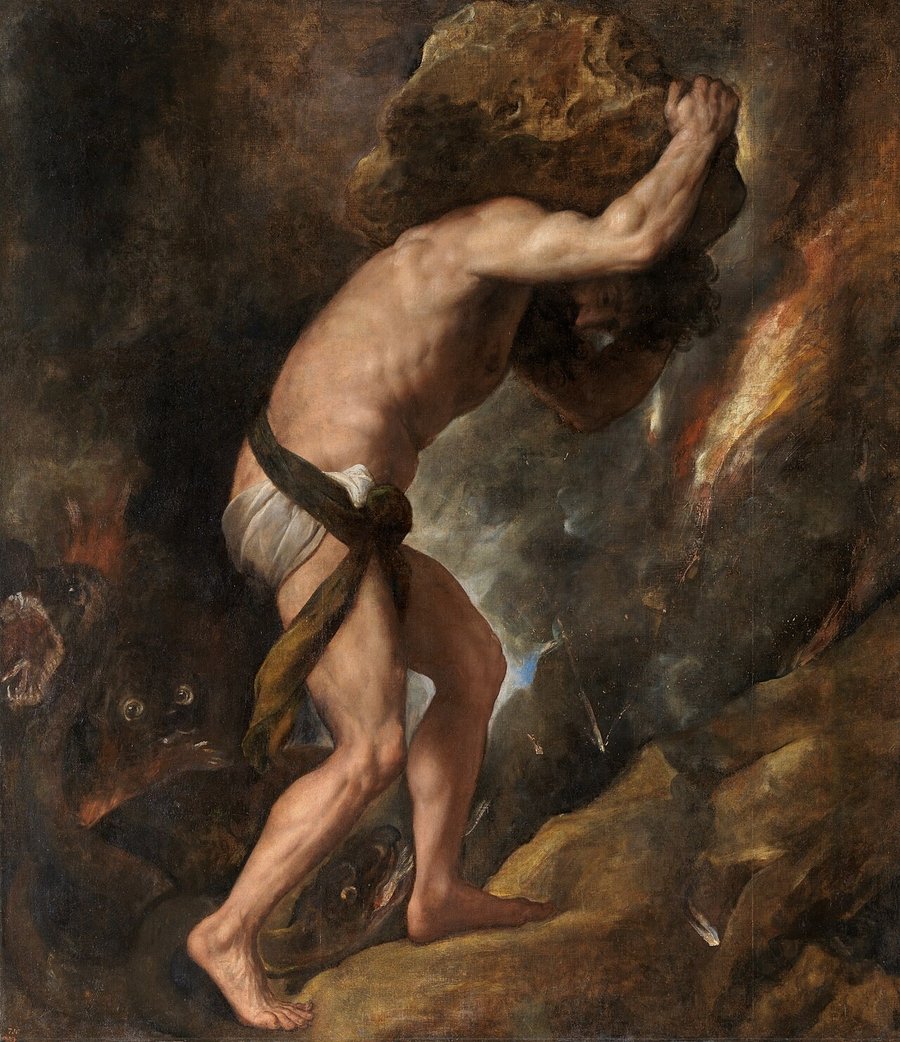
Alongside her, two very different books.
The Myth of Sisyphus, by Camus, which asks what sustains a man when the task never ends.

And Grit, by Angela Duckworth, which investigates why some people keep going after the will runs out.
The three ended up talking to one another without my planning it: a man who rows for ten years to get home, another who pushes the stone forever, and the question of why anyone persists.
Listening, in that ancient sense, is not courtesy. It is the condition for a book to still be able to say something we were not looking for.
All the books in this letter, and the ones that appear in the channel’s lessons, are on our recommended readings page.
The next letter comes out of the Odyssey, with what the rereading has been leaving along the way.
Until the next letter,
John Wanzer
The list received this letter on August 2, 2026.
Letters from Nous
Receive the next letter before the site
The list receives it first, the public archive comes later. One letter a month, no spam.
Join the listMonthly · by John Wanzer